Nice is one of those cities that immediately feels like a lifestyle decision. It’s not just about moving to France, it’s about choosing a very specific rhythm of life. One that combines Mediterranean ease, strong infrastructure, and year-round activity in a way that few cities manage.
At first glance, it can feel almost too good to be true, sea on your doorstep, mountains within reach, over 300 days of sunshine a year and an international airport connecting you globally. But like many places in the south of France, Nice isn’t just about beauty. It’s about how that lifestyle translates into your everyday reality.
For some, it’s exactly what they’ve been looking for. For others, the trade-offs become clearer once they arrive.
Table of Contents
Best neighbourhoods to live in Nice
Nice offers a wide range of neighbourhoods, each with its own pace and atmosphere. Choosing the right one will shape your daily experience far more than the city itself.
The hyper centre (city centre)
The heart of Nice is where everything happens.
Living here means:
- Immediate access to shops, restaurants, and services
- Walking distance to the sea
- Strong transport connections
It’s particularly popular for second homes, short and long-term rental investment or expats who want convenience above all. The trade-off is density. It can feel busy, especially during peak seasons, and space is often more limited.
Old town (vieux Nice)
Vieux Nice is one of the most iconic parts of the city. With its colourful buildings, narrow streets, and lively atmosphere, it offers a very immersive experience of local life.
It attracts:
- Students and younger expats
- Couples looking for a vibrant lifestyle
- People who want everything within walking distance
But it comes with clear considerations:
- Higher prices due to location and charm
- Noise, particularly in the evenings
- Older buildings that can vary in comfort
It’s a lifestyle choice more than a practical one.
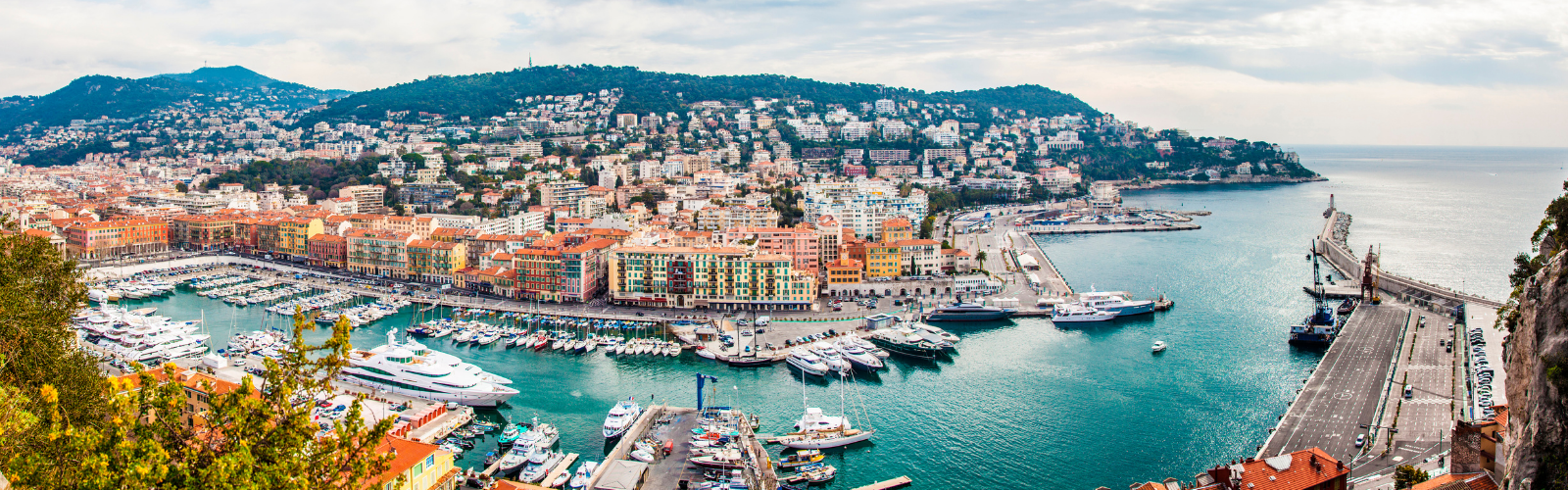
The port
The Port area has evolved significantly in recent years and continues to grow in popularity.
It offers:
- A more local, neighbourhood feel
- Proximity to both the Old Town and the sea
- A growing café and restaurant scene
It’s increasingly seen as a good balance between lifestyle and liveability, a strong option for long-term renters and more “grounded” alternative to central tourist areas. This is often where people end up after initially considering more central locations.
Promenade des Anglais
This is Nice’s most famous address and one of the most recognisable seafronts in the world.
Living here means direct sea views, high-end buildings and amenities and premium, lifestyle-driven environment.
But it sits in a category of its own:
- Property is rare and expensive
- Pricing reflects prestige rather than practicality
- It’s less about convenience and more about experience
This area tends to suit those who prioritise lifestyle above all else.
The hills (Les collines)
If you’re looking for space and calm, the hills above Nice offer a completely different experience. This area attracts families, retirees and people looking for privacy and greenery. You’ll find larger properties and a quieter, more residential atmosphere.
But it comes with trade-offs:
- Greater reliance on a car
- Less immediate access to the city centre
- A more detached daily rhythm
This is where Nice starts to feel less like a city and more like a lifestyle retreat.
Cost of living in Nice
Nice is generally considered one of the more expensive cities in France outside of Paris, but it still offers relative value depending on your expectations.
Housing and property prices
- Average price: ~5,336 €/m²
- Apartments: ~5,274 €/m²
- Houses: ~6,113 €/m²
- Average rent: ~20 €/m²
For rentals:
- Around 881 €/month for a furnished one-bedroom
Overall, rent prices are approximately 30% lower than Paris, though demand in desirable areas can push prices higher.
Everyday living costs
Day-to-day life in Nice is slightly more affordable than Paris, but still reflects its status as a premium coastal city.
- Cost of living: ~4.2% lower than Paris (excluding rent)
- Estimated monthly costs (single person): ~1,065 €
- Utilities (85m² apartment): ~225 €/month
- Meal in a mid-range restaurant: ~40 €
You’re paying for lifestyle here, and that’s something to factor in.
Getting around Nice
Nice is well-connected and relatively easy to navigate, especially within the city itself.
Public transport is operated by Lignes d’Azur, offering:
- Three tram lines (L1, L2, L3)
- A comprehensive bus network
Key points:
- Trams run from early morning until around midnight
- A single ticket costs 1.70 € (valid for 74 minutes with transfers)
- Monthly pass: ~45 €
- Reduced fare (65+): ~22.50 €
The tram line connecting the airport to the port makes movement across the city particularly efficient.
For exploring beyond Nice, the TER train is the best option for coastal towns like Villefranche-sur-Mer, Beaulieu-sur-Mer, or Cannes.
Nice Côte d’Azur Airport, one of the busiest in France, adds a strong layer of accessibility for both domestic and international travel.
Lifestyle in Nice
Living in Nice is often described as a balance between elegance and ease.
The lifestyle is shaped by three main elements, the Mediterranean climate, the proximity to both sea and mountains and a strong cultural and social scene.
Daily life here often includes:
- Walks along the Promenade des Anglais
- Visits to local markets like Cours Saleya
- Easy access to beaches, hiking trails, and even ski resorts
Some of the key lifestyle highlights include:
- Over 300 days of sunshine per year
- Swimming possible from spring through autumn
- A mix of traditional Niçoise culture and international influence
- A strong cultural offering (museums, festivals, exhibitions)
Nice is one of the few places where you can be at the beach in the morning, in the mountains by the afternoon and back in the city for dinner. That flexibility is what draws many people in, and keeps them there.
Expat life in Nice
Nice has a long-established international community. You’ll find British and Australian retirees, american expats and broader European presence.
However, one thing to be aware of is the demographic balance.
Many expats in Nice tend to be:
- Older
- Retired or financially established
- Already settled into their lifestyle
This can shape the social experience, particularly for younger movers or those earlier in their careers.
Some useful communities include:
Integration is possible, but it often requires a bit more intention depending on your situation.
Why Nice might be the perfect city for you
Nice works particularly well if you’re looking for:
- A lifestyle-first move
- Warm weather and outdoor living
- Strong international connections
- A balance between city and nature
It tends to suit retirees, lifestyle-driven expats and remote workers with flexible schedules.
But it’s not just about how it looks. The key question is whether the pace, cost, and structure of Nice align with how you want to live day to day.
Still deciding where to move?
Explore our other city deep-dives to compare neighbourhoods, housing costs and expat life across France.
FAQ: Living in Nice
Is Nice a good place to live in France?
Yes, particularly for those prioritising lifestyle, climate, and accessibility.
Is Nice expensive to live in?
It’s more expensive than most French cities, but still more affordable than Paris.
Do you need a car in Nice?
Not necessarily in the city centre, but it becomes more useful if you live in the hills or surrounding areas.
Is Nice good for expats?
Yes, though the expat community tends to be older, which may influence your experience depending on your profile.
Planning a move to France or just thinking about it?
Book a free 15-minute consultation to discuss your move and the support available from Ibanista. 👉 Schedule your call here
Not ready for a call? No problem. Explore our free resources to learn at your own pace:
📚 Browse the blog for expert tips
🎧 Listen to our podcast for real stories and insights
Wherever you are in your France journey, we’re here to help.