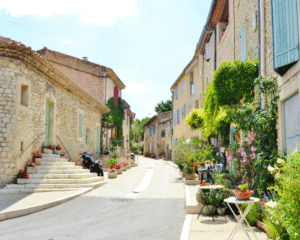
Buying a property in France is one of the most exciting decisions you will make, and one of the most significant. Whether you are planning to retire here, make France your permanent home, or invest in a holiday property, the process is well structured and offers genuine protection for buyers. But it works differently from what most UK and US buyers are used to, and understanding the steps before you start makes the whole experience considerably less stressful.
The good news is that as an American or British buyer, you do not need to be resident in France to purchase property here. You can buy before you have a visa, before you have a French address, and before you have a French bank account. For many expats, buying the property first is actually the most logical route, it gives you the stable address that makes the visa application significantly easier.
Here are the five essential steps to buying a house in France, explained clearly so you can move from dreaming to doing.
Table of contents

Define your property project and budget
Before you start scrolling through listings, you need two things in place: a clear idea of what you are looking for, and a realistic view of what you can afford. Getting these right at the start saves enormous amounts of time and prevents the disappointment of falling in love with properties that were never within reach.
Your borrowing capacity in France depends on several factors that are worth understanding before you speak to any agent. French banks and mortgage brokers assess borrowing based on your income, your existing financial commitments, your deposit, your residency status, and the nature of your income, whether that is employment, self-employment, or pension. Each of these factors is weighted differently in the French system compared to what you may be used to at home.
Know your budget
- Speak to a French bank or mortgage broker early
- Use online simulators to estimate borrowing capacity
- Add 7-8% for notary fees and taxes on older properties
- Factor in exchange rate risk if buying in euros
- Get a mortgage agreement in principle before viewing
Clarify your criteria
- Which regions or cities you are genuinely open to
- House, apartment, village home, or new build
- Number of bedrooms and outdoor space requirements
- Proximity to shops, transport, healthcare, schools
- Must-haves versus nice-to-haves
If your savings or income are in GBP, USD, or another currency, exchange rate risk deserves early attention. The gap between making an offer and completing a purchase in France can be several months, and a meaningful move in EUR against your home currency during that time can add thousands to your effective cost. This is not a minor consideration, for many expats, managing currency risk is as important as negotiating the right price.
Notary fees on older properties in France typically run at around 7-8% of the purchase price. On a 300,000 € property that is 21,000 to 24,000 € on top of the price, a figure that surprises many first-time buyers who did not build it into their initial budget calculations.
Search for property and do proper due diligence
With your budget and criteria in hand, the search can begin. You can browse French property portals, work with local estate agents, use a buyer’s agent or property finder, or rely on word of mouth in areas with strong expat communities. Going in person before you commit is essential, France is a country where the feel of a neighbourhood, a village, or even a specific street can differ dramatically from what photographs suggest.
Finding the right property is only half the job. The other half is understanding exactly what you are buying, and that requires more than a viewing. France has robust buyer protections built into the system, but they only work if you engage with them properly.
To understand whether an asking price is fair, use official tools that show real transaction prices rather than relying on listings alone. DVF (Demande de Valeurs Foncières) is open data covering sales over the last five years. Patrim is accessible through your French tax account. Both allow you to compare the price per square metre with recent nearby sales, a straightforward way to sense-check what you are being asked to pay.
The seller is required to provide a Dossier de Diagnostic Technique (DDT), a package of technical reports covering the property’s condition and compliance. This is not optional, and it covers a lot of ground:
- DPE: the energy performance rating, which now carries legal weight and directly affects value and future renovation requirements
- Lead report (CREP): required for properties built before 1949
- Asbestos report: for buildings with permits issued before 1997
- Gas and electricity checks: required where installations are more than 15 years old
- Termite report: in designated risk areas
- État des risques: natural and technological risk report covering flooding, subsidence, and other hazards
- Sanitation report: where the property is not connected to mains drainage
From 2025 onwards, an energy audit is mandatory for the sale of F and G-rated properties and certain E-rated homes. This audit goes further than the DPE and sets out a roadmap for improving the property’s energy performance. As a buyer, understanding the DPE and audit findings is essential, they affect not just the current value but the cost of ownership over time.
If you are buying an apartment, you are buying into a copropriété, a co-ownership structure covering the shared parts of the building. French law requires the seller to provide the co-ownership rules, minutes of the last three general meetings, the building maintenance log, and recent service charge statements. These documents reveal planned works, the stability of charges, and the quality of building management. Skipping this analysis is one of the most common and costly mistakes foreign buyers make.
> You might be interested in this article: Property rights in France: Know your rights when buying a house
Make an offer and arrange your financing
Once you have found a property you want to buy, the next stage is making a formal offer. In France, offers are typically made in writing, often through the estate agent. They are usually valid for a limited period, five to ten days is common, and can be at the asking price or negotiated. An accepted written offer does not transfer ownership, but it signals genuine intent and leads to the next stage: the preliminary contract.
By the time you make a formal offer, your financing should already be in order. Not in progress, in order. A mortgage simulation or agreement in principle should be in your hands before you commit to anything binding.
This is also the right moment to choose your notary. In France, every property transaction must go through a notaire, a state-appointed legal officer who handles the verification, documentation, and registration of the sale. As the buyer, you have the right to appoint your own notary rather than using the seller’s. If two notaries are involved, they share the regulated fee, it does not cost you more. For an international buyer unfamiliar with the French system, having your own notary who is focused on your interests is a meaningful protection.
If you are financing the purchase with a mortgage, the preliminary contract must include a condition suspensive d'obtention de prêt, a legal clause that protects you if the bank refuses the loan. If your mortgage is declined under the terms of this clause, the sale is cancelled and your deposit is refunded in full. This is a strong buyer protection, but it only works if the clause is correctly included in the contract, which is one more reason to have your own notary reviewing the document on your behalf.
Sign the preliminary contract (compromis or promesse de vente)
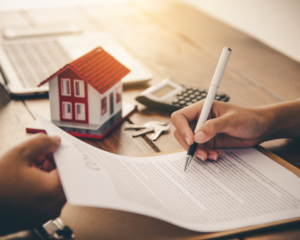
The preliminary contract is the formal agreement between buyer and seller that locks in the sale before the final deed is signed. It is a major legal step, not something to skim read, and it comes in two main forms. The compromis de vente is a bilateral agreement where both parties commit to complete, subject to agreed conditions. The promesse unilatérale de vente gives the buyer an option to purchase within a set period, with the seller committed to the sale.
The contract will set out the identities of both parties, a detailed description of the property, the agreed price and payment terms, whether a loan is involved, the target date for signing the final deed, and the conditions suspensives, the suspensive conditions under which the sale can fall through without penalty.
At this stage, the buyer pays a deposit, typically five to ten percent of the purchase price. This money is not paid to the seller. It is held in escrow by the notary or, in some cases, by the agent in a registered, guaranteed account. It will be deducted from the final amount due at completion.
After signing the preliminary contract and receiving formal notification, you have a ten-day cooling-off period during which you can withdraw from the sale for any reason, without penalty, and your deposit will be refunded within 21 days. This is a legal right that cannot be waived. Outside of that period, your deposit is protected by the suspensive conditions, but if you simply change your mind with no qualifying reason, the seller may have the right to retain it.
The DDT diagnostics package and, for apartments, the ALUR co-ownership documents must be annexed to the preliminary contract. If essential documents are missing when you sign, it can affect your legal rights and create delays. If anything is absent, raise it with your notary before signing, not after.
Sign the deed of sale (acte authentique) and become the owner
The final step is signing the acte authentique de vente at the notary’s office. This is the moment the property becomes legally yours. The notary reads through or summarises the deed, ensures both parties understand the terms, and oversees the transfer of funds and the handing over of keys.
At completion, you pay the balance of the purchase price, minus the deposit already paid, along with the notary fees and registration taxes, which typically run at around seven to eight percent of the purchase price on older properties. The seller receives their funds through the notary, and you receive the keys.
- After signing: the notary registers the transaction with the Service de Publicité Foncière and pays the registration taxes to the state and local authorities on your behalf
- Attestation de propriété: you will receive this certificate shortly after completion, which you can use immediately for insurance, utilities, and administrative purposes
- Titre de propriété: your formal title deed arrives a few months later once registration is complete
If you cannot be present in France for the signing, it is possible to grant a power of attorney to a trusted representative, including your notary, to sign on your behalf. This is a well-established route for international buyers and is entirely legal. Discuss it with your notary early if this is likely to be relevant to your situation.
Key takeaways for expat buyers
What to remember
- You do not need a visa or French residency to buy property in France, and buying first can actually make your visa application easier
- The process follows five clear stages with strong legal protections built in at each one
- Notary fees of 7-8% on older properties must be factored into your budget from day one
- Your deposit (5-10%) is held in escrow, not paid to the seller, and is refundable within the cooling-off period or if a suspensive condition fails
- Always read the DDT diagnostics and, for apartments, the co-ownership documents before committing
- If your funds are in GBP or USD, currency risk between offer and completion can be significant, plan for it early
- Appoint your own notary rather than relying on the seller's, it costs the same and gives you independent legal protection
FAQs: Buying a property in France
Managing currency risk when buying a property in France
If your income or capital is in GBP, USD or another currency, and your purchase is in EUR, exchange rate movements can have a real impact. Between making an offer and completing, the euro can move significantly against your home currency, increasing (or decreasing) the cost in your base currency.
Working with a specialist foreign exchange provider can help you:
- Secure more competitive rates than many high-street banks
- Use forward contracts or structured solutions to protect your budget
- Avoid last-minute surprises when large transfers are due
For many expats buying a house in France, managing currency risk is as important as negotiating the right price. If you want to find out how we can optimise your finances, book a free consultation call with us to discuss your FX strategy.
Updated in April 2026.
Planning a move to France or just thinking about it?
Book a free 30-minute call with our team for personalised guidance on relocating to France. 👉 Schedule your call here
Not ready for a call? No problem. Explore our free resources to learn at your own pace:
📚 Browse the blog for expert tips
🎧 Listen to our podcast for real stories and insights
Wherever you are in your France journey, we’re here to help.