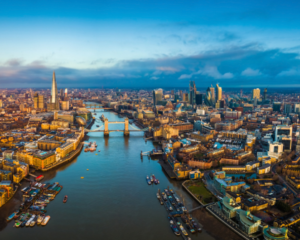
France has become one of the most popular destinations in the world for Americans looking for a different pace of life, access to high-quality public services, and a genuinely rich cultural experience. Whether the motivation is retirement, remote work, dual citizenship, or simply a long-held love of French lifestyle, thousands of US citizens are already calling France home, and the number continues to grow.
But France is a large and remarkably varied country. The experience of living in a Paris arrondissement is completely different from life in a Provencal village, a Bordeaux suburb, or a quiet corner of the Dordogne. Getting the choice of location right is one of the most important decisions of the entire move. This guide covers where Americans actually settle, what draws them to those places, and what you should be thinking about before you decide.
Planning your move from the US to France?
Download our free guide, visas, housing, banking, and everything in between, written specifically for Americans making the move.
Download the free guide →Table of Contents

Most popular regions for American expats
While Americans live in every corner of France, certain regions consistently attract higher concentrations of US expats. The common thread is a combination of lifestyle benefits, international infrastructure, and accessibility, whether that means direct flights to the US, established English-speaking communities, or simply a quality of life that matches what Americans are looking for when they make the move.
Île-de-France, Greater Paris
Paris and its surrounding suburbs remain the top destination for Americans in France, offering the deepest international infrastructure and the largest established American expat community.
- Large, long-established American community with its own cultural institutions
- International schools including the American University of Paris
- English-speaking doctors, lawyers, and professional services widely available
- Direct flights to most major US cities from Charles de Gaulle
Provence-Alpes-Côte d’Azur (PACA)
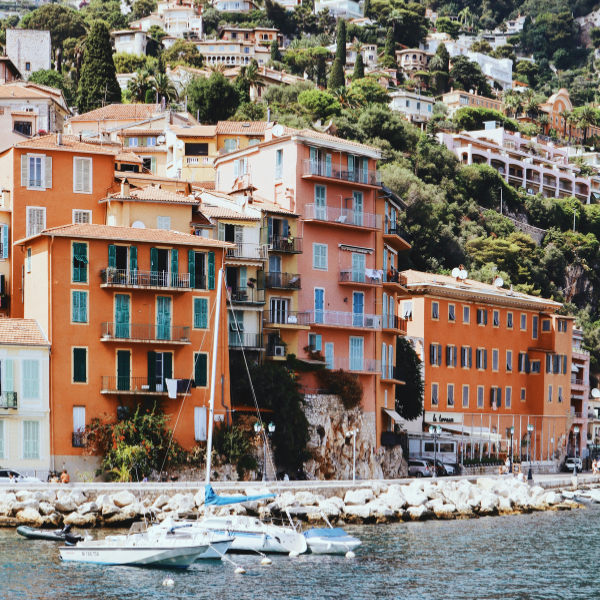
The south of France attracts Americans with its Mediterranean climate, beautiful coastlines, and the quality of life that Provençal towns offer. Especially popular with retirees and second-home owners.
- Mild winters, long summers, and 300+ days of sunshine per year
- Close to Italy with Nice and Marseille airport connections
- Strong balance of leisure, food culture, and natural beauty
- Well-developed English-speaking services in tourist-oriented towns
Nouvelle-Aquitaine
The Dordogne and Gironde have become known for large English-speaking expat populations. Bordeaux, Bergerac, and Sarlat draw Americans wanting picturesque countryside and accessible property prices.
- Medieval villages, wine country, and some of France’s most beautiful scenery
- Significantly more affordable property than Paris or the Riviera
- Strong English-speaking expat networks already established
- Bordeaux offers urban life and excellent transport links alongside the rural hinterland
Occitanie
Home to Toulouse, Montpellier, and Carcassonne. Combines affordability, a relaxed Mediterranean climate, and genuine urban energy. One of the fastest-growing regions for American expats.
- Affordable housing in both cities and countryside
- Good TGV connections from Toulouse and Montpellier
- International universities and growing tech sector in Toulouse
- Proximity to the Pyrenees and the Mediterranean
Auvergne-Rhône-Alpes
Lyon, Annecy, and Grenoble are consistently rated among the most liveable cities in France, clean, safe, well-connected, and with excellent infrastructure at lower cost than Paris.
- World-class outdoor access: skiing, hiking, and cycling all nearby
- Close to Switzerland and Geneva for international professionals
- Lyon is one of France’s great food cities and a genuinely underrated expat base
- Excellent for families and professionals seeking work-life balance
Top cities and towns where Americans settle
Within these regions, certain cities and towns stand out consistently as expat hubs. The pattern holds across demographic groups: Americans tend to settle where they find a combination of international services, a manageable pace of life, and a sense that the place is already somewhat used to welcoming people from abroad.
Paris
The cultural, economic, and diplomatic heart of France, and home to the largest concentration of Americans in the country. Paris hosts well-established expat institutions, numerous English-speaking schools, American churches, and a significant presence of international organisations and embassies.
7th arrondissement
Elegant, central, near the Eiffel Tower. A classic expat choice for professionals and families who want to be at the heart of Paris.
16th arrondissement
Residential, green, and family-friendly. Good schools and quieter streets close to the Bois de Boulogne.
Neuilly-sur-Seine
Upscale suburb with international schools and easy access to the La Défense business district.
Versailles
Historic, family-oriented, with direct TGV access to Paris. Popular with families and embassy staff.
Nice and the French Riviera
The Riviera offers a completely different lifestyle: relaxed, sunny, and close to Italy. Nice, Antibes, and Menton are especially popular with American retirees and creatives. The combination of Mediterranean climate, excellent healthcare infrastructure, and Nice Côte d’Azur Airport’s international connections makes this one of the most consistently appealing regions for Americans making a permanent move.
Aix-en-Provence and Avignon
These Provencal towns offer a compelling blend of culture, walkability, and sunshine. Aix is known for its universities and international language schools, which means a consistently young, international energy alongside the established expat community. Both towns are well-served by TGV links and Marseille Airport, making them practical as well as beautiful choices.
Bordeaux and the Dordogne
Bordeaux has a growing American community drawn to its tech sector, wine culture, and Atlantic proximity. Nearby towns in the Dordogne, Bergerac, Sarlat-la-Canéda, Périgueux, are known for affordable stone properties, extraordinary countryside, and one of the most established English-speaking expat communities in rural France.
Toulouse and Montpellier
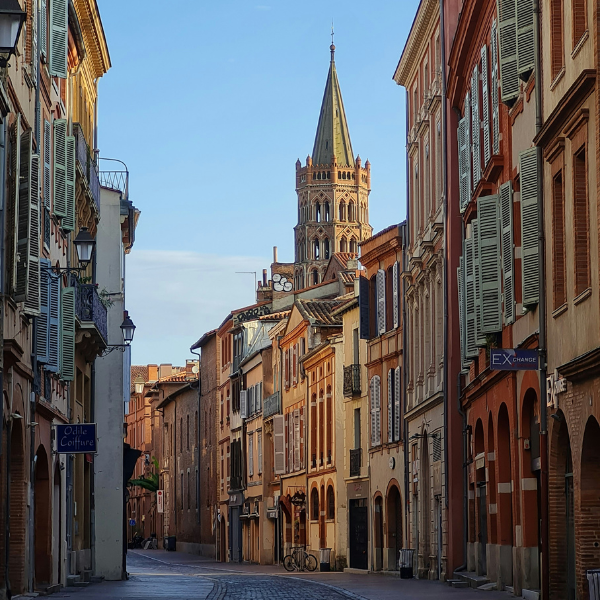
Both are thriving university cities with growing international scenes. Toulouse is France’s aerospace capital, Airbus and the tech ecosystem create a large international professional community and a rental market that reflects it. Montpellier has strong healthcare infrastructure, a young population, and an energy that many expats find more authentically French than cities with larger tourist industries.
Lyon and Annecy
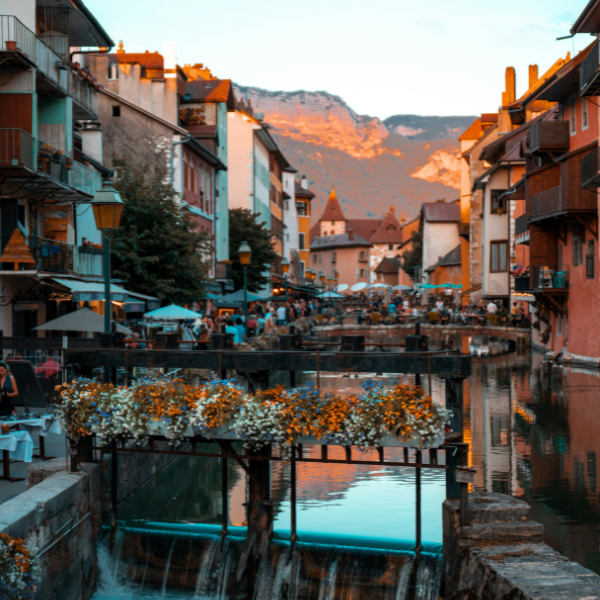
Lyon offers a quality of life that consistently surprises people who arrive expecting a smaller, slower version of Paris. It is a proper city, France’s second financial centre, with exceptional food, world-class healthcare, and a strategic location that puts you within two hours of Paris, Geneva, and the Alps. Annecy, near the Swiss border, is particularly popular with families and outdoor enthusiasts who want mountain access without sacrificing urban amenities.

What American expats look for when choosing where to live
The decision of where to settle in France is about far more than scenery or property prices. It is about lifestyle fit, long-term stability, and the practical realities of daily life in a new country. Most Americans weigh up the same set of factors, in different orders depending on their situation.
Language accessibility and English-speaking communities
While most Americans arrive excited to learn French, the reality of navigating healthcare, schools, banks, and administration in a new language is more challenging than it sounds. Settling somewhere with an existing English-speaking community can make the early months significantly more manageable, without removing the incentive to integrate over time. Cities like Paris, Nice, and Bordeaux, and established expat towns like Aix-en-Provence and the Dordogne villages, offer English-speaking doctors, bilingual schools, and community networks that ease the transition considerably.
Healthcare access and quality
France’s healthcare system is world-class, but access and convenience vary significantly by location. Urban areas provide faster access to specialists. For retirees or anyone with existing health needs, proximity to hospitals and clinics is often a deciding factor. Once resident, expats register with CPAM and apply for a Carte Vitale, a process that is well worth understanding before you choose your location.
Transport and travel links
Americans who plan to travel back to the US regularly, for family, business, or simply to keep options open, prioritise locations with international airport access. Paris, Nice, Lyon, and Toulouse all offer direct or one-stop connections to major US cities. TGV access matters for domestic travel, and in some areas a car is effectively essential, worth factoring into your overall cost of living calculation.
Property options and cost of living
One of the genuine surprises for Americans arriving in France is how much further a budget stretches outside the major cities. Rural areas like the Dordogne, Occitanie, and parts of Auvergne offer not just affordable property but a lower cost of daily life in groceries, healthcare, and transport. Paris and Nice are considerably more expensive, but they also deliver urban services and international infrastructure that smaller towns simply cannot match.
Quality of life and lifestyle fit
This is ultimately the most personal factor, and the one that is hardest to assess without spending meaningful time in a place. Retirees often seek tranquillity and community. Young professionals want city infrastructure with nature access. Families prioritise walkability, safety, and good schools. The point is not to find the objectively best location in France, it is to find the one that fits the life you are actually planning to live there.
Why Americans move to France
The reasons Americans relocate to France are as varied as the places they choose to live. But a few recurring themes explain why France specifically, rather than any other European country, continues to attract Americans in growing numbers.
Retirement and lifestyle change
France is especially attractive to retirees seeking a slower pace, walkable communities, and better access to affordable healthcare. The Assurance Maladie system, combined with a temperate climate and rich cultural life, makes regions like Nouvelle-Aquitaine, Occitanie, and Provence especially appealing.
- Lower cost of living in rural areas
- Mild winters and relaxed day-to-day rhythm
- Excellent healthcare at a fraction of US prices
Dual citizenship and ancestry
Many Americans qualify for French or EU citizenship through ancestry, marriage, or long-term residency. France’s favourable visa routes make it easier for Americans to pursue:
- Long-stay visitor visas (for retirees or sabbaticals)
- Talent visas (for professionals and entrepreneurs)
- Student visas (for those pursuing education)
Once legally resident, Americans can begin the path to citizenship after five years, or two years if studying in France.
Remote work and digital freedom
The rise of remote work has opened the door for professionals to live in France while keeping US-based careers. Popular regions for digital nomads include Lyon, Bordeaux, and Montpellier, thanks to:
- Good internet and infrastructure
- Affordable housing outside city centres
- Access to co-working spaces and international communities
France also offers a Talent Passport visa for skilled remote workers and entrepreneurs.
Education and creative pursuits
France’s world-class universities, language schools, and cultural institutions draw students and creatives alike. Many Americans relocate to pursue:
- University degrees or study-abroad experiences
- Careers in art, fashion, food, and writing
- French language immersion programs
Cities like Paris, Aix-en-Provence, and Toulouse offer rich opportunities in both academia and the arts.
Family and cultural enrichment
For families, France offers safe neighbourhoods, robust public healthcare, and free or low-cost schooling, including bilingual and international options. Many parents are drawn to:
- A healthier, less commercialised lifestyle
- Exposure to multiple languages and cultures
- A slower, family-oriented rhythm of life
Tips for Americans choosing where to live in France
France is a remarkably diverse country, and the experience of living here varies enormously depending on where you settle. These tips come from years of working with Americans at every stage of the relocation process.
- Visit before you decide, properly: a short holiday is not enough to understand what daily life will feel like. If at all possible, visit multiple regions and stay for several weeks in your shortlisted areas. Go in both peak and off-season. Talk to expats who are already there, not just people who visited once.
- Compare cost of living by region, not just by city: the headline difference between Paris and Occitanie is striking, but the full picture includes transport costs, healthcare, utilities, groceries, and the presence or absence of a car. Research the total picture, not just property prices.
- Evaluate your connectivity needs honestly: if you need to travel to the US frequently, or need fast TGV access within France, let that shape your location choice. Paris CDG, Nice, Lyon, and Toulouse are the main hubs for international connections.
- Check English-language services in your target area: in rural areas, English-speaking doctors, legal advisers, and schools may be limited. Larger cities and established expat hubs offer far more support infrastructure. If you are not yet confident in French, factoring this in is practical, not a weakness.
- Understand the local climate and seasonal rhythm: coastal Brittany, the hot and dry Midi, Alpine Haute-Savoie, and the Atlantic southwest all have completely different climates. Choose a region that suits your lifestyle, not just the version you experienced on a summer holiday.
FAQs: Living in France as an American
Not sure which region of France suits your lifestyle? Take our free Find Your Ideal Region in France quiz, it takes five minutes and helps you narrow down your options based on your priorities, lifestyle, and budget.
Updated: June 2026
Planning a move to France or just thinking about it?
Book a free 15-minute consultation to discuss your move and the support available from Ibanista. 👉 Schedule your call here
Not ready for a call? No problem. Explore our free resources to learn at your own pace:
📚 Browse the blog for expert tips
🎧 Listen to our podcast for real stories and insights
Wherever you are in your France journey, we’re here to help.