For many Americans, Brits, and other international newcomers, cheques in France feel like a relic. Yet in France, the chèque remains a normal, legally powerful way to pay. It is still used for rent, schools, tradespeople, clubs, and certain administrative payments, and it carries stricter legal consequences than most people expect.
If you are moving to France, opening a French bank account, or simply trying to understand how payments work day to day, this article explains what cheques are, how they work, and why they still matter.
Table of Contents
What a French cheque is (and why it still exists)
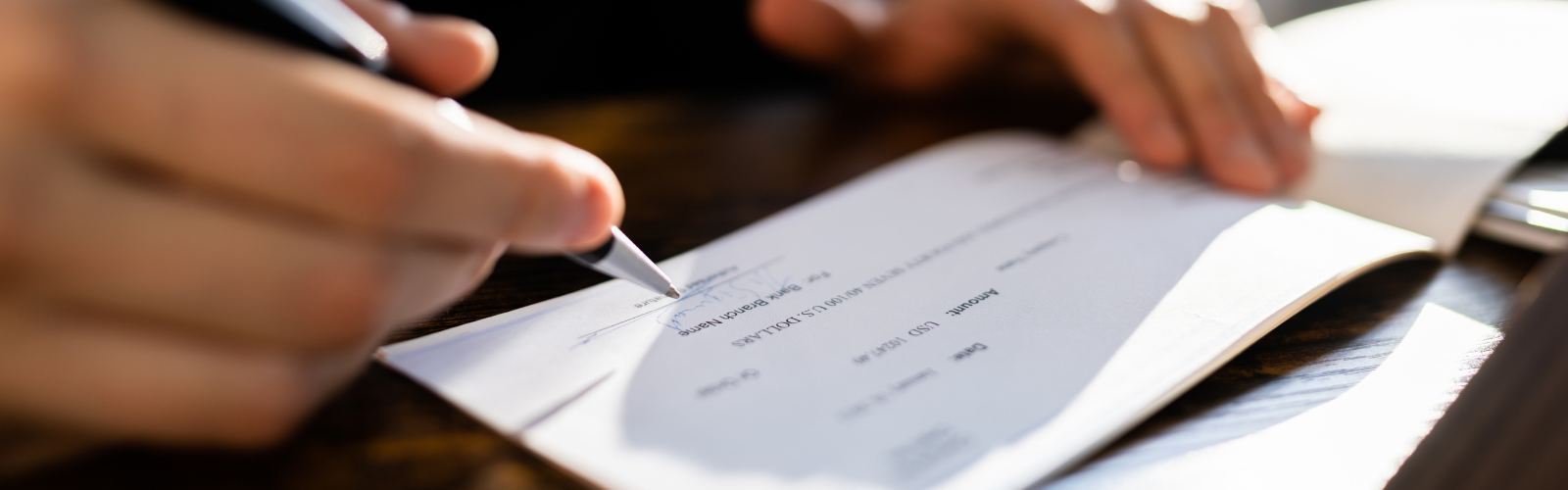
A French cheque (chèque) is a paper payment order drawn directly on your bank account. By writing and signing it, you instruct your bank to pay a specific amount to a named beneficiary.
Key points to understand:
- Chequebooks (carnets de chèques) are usually provided free of charge with a standard French current account.
- A cheque is legally treated as cash-like. Once presented, it is payable immediately.
- You cannot stop a cheque simply because you changed your mind. Stops are allowed only in specific cases such as loss, theft, or proven fraud.
This legal status explains why landlords, schools, associations, and even some professionals still accept cheques with confidence.
Are cheques still common in France?
Yes, less than before, but far more than many expats expect.
Cards and SEPA bank transfers dominate everyday spending, but cheques remain common for:
- Rent payments, especially with private landlords
- Tradespeople (plumbers, electricians, builders)
- Schools and extracurricular activities
- Clubs, associations, and local services
- One-off payments to notaires or administrations
Many French households keep a chequebook alongside their debit card and online banking, using cheques selectively rather than daily.
Validity, clearing time, and costs
Understanding timing and costs is critical, especially if you are new to French banking.
Validity period
- A French cheque is valid for 1 year and 8 days from the date written on it.
- After this period, the bank will normally refuse to cash it.
Clearing time
- Cheques are typically processed the same or next working day after deposit.
- Funds may appear quickly, but final settlement can still be reversed if the cheque bounces.
Fees
- Domestic French cheques: usually free to issue and deposit.
- Foreign cheques or non-euro cheques: often expensive to process, with long delays and high fees.
For expats, this is why French administrations strongly prefer French cheques over foreign ones.
Post-dated cheques: A common trap
In some countries, post-dating a cheque delays payment. Not in France.
Under French law:
- A cheque is payable on presentation, even if it is post-dated.
- Banks usually debit it as soon as it is deposited, regardless of the written date.
Never rely on post-dating as a payment strategy in France.
How cheques are used in daily life
When a shop or service accepts cheques:
- You may be asked for photo ID.
- The merchant may fill in the cheque using an electronic terminal.
- You check the details and sign.
Some shops refuse cheques entirely, but where accepted, the process is straightforward, and culturally normal.
How to write a cheque in France (step by step)
Writing a French cheque must follow a precise format. Errors can invalidate it.
1. Amount in numbers
- Write the amount in euros and cents in figures (e.g. 86,50 €).
- Use a comma between euros and cents.
- Start as far left as possible, then draw a line to prevent additions.
2. Amount in words (in French)
- Write the amount in full, in French.
- Example: 86,50 € → quatre-vingt-six euros et cinquante centimes.
- If there are no cents, write euros and draw a line after it.
3. Payee’s name
- Write the full name of the person or organisation.
- Avoid gaps; draw a line if there is empty space.
4. Place and date
- Write the place (e.g. Paris, Lyon).
- Date format is day/month/year (e.g. 07/01/2026).
5. Signature
- Sign in the bottom right corner.
- Without a signature, the cheque cannot be cashed.
Before handing it over, double-check that figures and words match exactly.
How to deposit a cheque in France
To deposit a cheque into your French account:
- Endorse the back with your account number and signature.
- Complete a cheque deposit slip (bordereau de remise de chèques) or use a deposit machine.
- Place the cheque (and slip, if required) in the bank’s deposit box or machine.
Most banks no longer require going to the counter.
Legal obligations and serious risks
This is where many foreigners underestimate cheques in France.
Insufficient funds are a big deal
Issuing a cheque without sufficient funds is illegal, not just inconvenient.
Consequences can include:
- Immediate refusal of the cheque.
- A banking ban (interdit bancaire) lasting up to 5 years.
- Mandatory surrender of all chequebooks.
- Registration in the Banque de France’s central file (Fichier Central des Chèques – FCC).
This ban applies across all French bank accounts, not just the one involved.
Repeated or serious misuse
Persistent misuse of cheques can lead to:
- Civil penalties.
- In some cases, criminal consequences under French monetary law.
For expats, this can seriously disrupt residency, housing, and daily life.
Cheques vs cards and bank transfers in France
Cheques coexist with modern payment methods:
- Cards: dominant for shopping and everyday spending.
- Bank transfers (SEPA): preferred for salaries, rent, utilities, and taxes.
- Cheques: trusted for one-off payments and situations where guarantees matter.
For newcomers, the key is understanding when cheques are expected, and respecting their legal weight.
Practical advice for expats
If you are new to France:
- Never write a cheque unless funds are already available.
- Avoid post-dating.
- Keep cheques neat and complete, sloppy cheques can get rejected.
- Expect cheques to be requested for rent, schools, and associations.
- Do not assume cheques are “old-fashioned” or informal, they are not.
Understanding cheques early can prevent banking bans and unnecessary stress.
FAQ: Cheques in France
Are cheques still widely used in France?
Yes. Less than in the past, but still common for rent, schools, tradespeople, and local payments.
Can I stop a cheque after writing it?
Only in limited cases: loss, theft, or fraud. You cannot stop a cheque just because you changed your mind.
Is it illegal to write a cheque without funds?
Yes. It can trigger a banking ban and registration with the Banque de France.
Do French cheques expire?
Yes. They are valid for 1 year and 8 days from the written date.
Can foreigners use cheques in France?
Yes, once you have a French bank account and chequebook.
Are cheques free to use?
Domestic French cheques are usually free. Foreign cheques can be expensive.
Final notes
Cheques may feel outdated, but in France they remain legally powerful, culturally normal, and financially risky if misunderstood. For expats, learning how cheques work is not optional, it is part of integrating smoothly into French financial life.
If you want, the next step can be a comparison of cheques vs bank transfers vs cards, or guidance on opening a French bank account as a new resident.
Planning a move to France or just thinking about it?
Book a free 15-minute consultation to discuss your move and the support available from Ibanista. 👉 Schedule your call here
Not ready for a call? No problem. Explore our free resources to learn at your own pace:
📚 Browse the blog for expert tips
🎧 Listen to our podcast for real stories and insights
Wherever you are in your France journey, we’re here to help.