One of the biggest challenges when moving abroad isn’t finding a home. It’s figuring out how to make friends in France and build a social life that feels fulfilling.
This is something Ben often talks about when helping people decide where to live. Beyond the beautiful properties and scenery, you need to think about your everyday routine. What hobbies will you continue? Where will you meet people?
And that’s where joining a local association can make a real difference.
French associations for expats and local residents offer everything from walking groups and sports clubs to art classes, choirs and volunteering opportunities. They’re a wonderful way to meet people, practise your French and become part of your new community.
Here’s how they work and how to find one near you.
Table of Contents
What is a French association?
If you’ve looked at municipal websites, community noticeboards or local Facebook pages in France, you’ve probably come across the word association.
In France, an association is generally a non-profit organisation that brings people together around a shared interest, activity or purpose. Most are established under the French law of 1 July 1901, which is why they’re often called associations loi 1901.
That sounds more formal than it is. The idea is simple: a group of people comes together to organise something they enjoy or support a cause they care about.
It could be a walking club, a local choir, a photography group, a gardening association, a sports club or an organisation that helps people in the community. Some associations are small and entirely volunteer-run. Others are substantial organisations with paid instructors, facilities and hundreds of members.
If you enjoy swimming, walking, painting, playing tennis or singing in a choir, those activities shouldn't disappear just because you've moved to another country. In fact, continuing your hobbies may be one of the best routes to building real friendships in France.
And because most associations meet regularly, you have the chance to see the same people week after week. That’s often how friendships begin.
Why making friends feels hard at first
It’s easy to imagine the enjoyable side of French life before you move: long lunches, beautiful countryside, weekend markets. But what about an ordinary Tuesday in November when the weather isn’t particularly good and your partner is busy?
If you’ve come from a busy working life, the adjustment can be significant. You’re not just moving to another country. You’re also potentially losing the daily structure and social connections that came with your previous routine.
Then there’s the language. You might be comfortable ordering food in French, but the idea of walking into a room full of French people mid-conversation can feel quite different.
So you stay within your comfort zone. Perhaps you join a few English-speaking Facebook groups, attend an occasional expat coffee morning and mostly connect with other international residents. Those connections can be genuinely valuable, especially in your first few months. But if you want to feel part of your local community, it’s worth looking beyond them too.
What types of association can you join?
One of the best things about the French association system is the variety. Whether you’re in a large city or a relatively small town, there’s usually something worth exploring.
Sports and fitness
Depending on the town, you might find tennis, badminton, swimming, cycling, yoga, Pilates, dancing, martial arts or running clubs. Some offer structured lessons with an instructor. Others are informal groups who meet to practise together.
It’s also worth looking for gymnastique douce, often used for gentler exercise classes, particularly popular with older adults. You don’t need to be athletic or particularly experienced to join most clubs.
Walking and hiking groups
Walking associations are popular across much of France. You’ll often see them described as clubs de randonnee pedestre. Some organise short local walks, others offer longer countryside hikes.
If you’re moving to France because you love the outdoors, a walking group is an ideal way to explore your new region while meeting people with similar interests. And unlike a one-off social event, a weekly walk gives you something to look forward to on a regular basis.
Arts, crafts and cultural groups
Perhaps sport isn’t your thing. Many French towns have associations for painting, pottery, photography, creative writing, sewing or local history. You may also find theatre groups, book clubs, cinema associations and organisations that arrange cultural outings.
Local heritage associations can be particularly interesting if you enjoy learning about the area you’ve chosen to call home.
Music and choirs
Many towns have an amateur choir, known as a chorale. Some welcome all comers, others have a simple audition process. There are also associations for instrumental music, traditional dancing and other musical activities.
Joining a choir can be a genuinely enjoyable way to improve your French through regular exposure to pronunciation and everyday conversation, without the pressure of a formal language class.
Volunteering
If you’re looking for something more meaningful, volunteering is another option. France has many charitable and community organisations that rely on volunteers, covering animal welfare, environmental projects, community events, food distribution and support for vulnerable people.
Some roles require stronger French language skills or specific training. Others are more accessible to newcomers. Working alongside others towards a shared goal can help relationships develop quite naturally.
Where to find local associations
This is where your local mairie becomes useful. Many municipalities publish an annuaire des associations, a directory of local clubs and organisations. These can include sports clubs, cultural groups, volunteering organisations and community activities.
If you’re still researching where to live in France, we’d actually suggest exploring these directories before you move. They can tell you a lot about what everyday life in a particular town might look like.
- Your mairie’s website: Search for your town name plus mairie, then look for sections labelled Associations, Vie associative, Sports, Culture or Loisirs.
- Local community centres: A maison des associations or centre social may host activities, provide meeting spaces or help residents find local groups.
- Online search in French: Searching in French will usually return more local results. Try club de randonnee Angers, association peinture Tours or chorale amateur Bordeaux.
- Local noticeboards: In smaller towns, community boards in the mairie, library, community hall or local shops are still worth checking.
- Ask your neighbours: Asking about local clubs is a natural conversation starter and often leads to genuine recommendations.
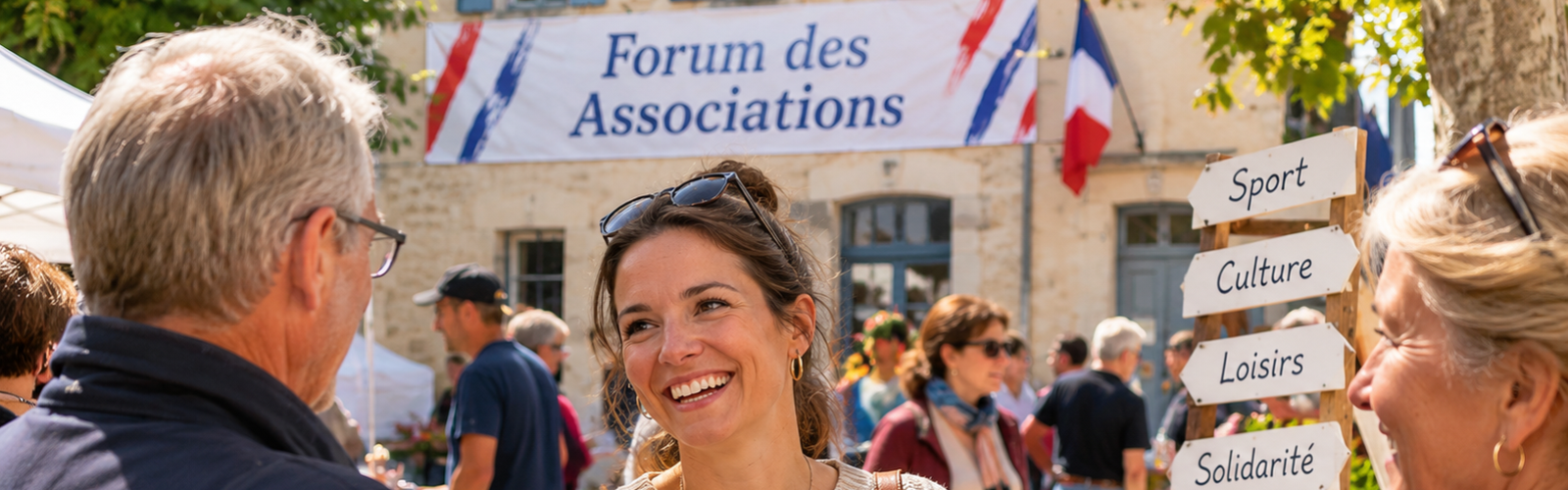
What is the forum des associations?
If you’re moving to France in late summer or early autumn, there’s one event worth looking out for: the forum des associations.
Many towns organise one around September, at the start of the school year. The idea is to bring local associations together in one place so residents can discover what’s available. Think of a sports hall or town square filled with stands representing different clubs, with people on hand to explain what they do, answer questions and sign up new members.
Don't worry. Many associations accept new members throughout the year, not just in September. If you arrive in January or March, contact the group directly and ask whether it's possible to join mid-season. It's always worth asking.
For somebody who’s just moved to France, the forum is an excellent shortcut. Rather than spending hours researching individual organisations, you can discover a wide range of activities in one afternoon and speak directly to the people involved.
How much does membership cost?
This depends entirely on the organisation and activity. Most associations charge an annual membership fee, known as a cotisation.
A small community association might charge €15 to €40 annually. A weekly sports or arts activity with professional instruction, facilities or equipment could cost €100 to €300 or more over a season. These are examples, not standard rates. Always ask what the membership includes, whether insurance is covered and whether a federation licence is required separately.
Some associations also offer a seance d’essai, a trial session. This is particularly useful if you’re unsure whether the activity or the group is right for you. When contacting an association, it’s always worth asking: Est-ce qu’il est possible de faire une seance d’essai?
Do you need to speak fluent French?
This is probably the biggest concern for English-speaking newcomers. And the honest answer is: not necessarily.
You don’t need to wait until your French is perfect before getting involved in local life. In fact, waiting until you’re fluent could mean missing out on years of opportunities to meet people.
If your French is still basic, a practical activity can be more accessible than something requiring lengthy discussion. Walking, painting, yoga or most sports are easier to follow than a literature group or debate club. You'll still hear French regularly and have opportunities for conversation, but the activity itself takes some of the pressure off.
And remember: you don’t need to have long conversations to build familiarity. After a few weeks of seeing the same faces, people start to recognise you, ask how you’re settling in and include you in conversation. That’s how it starts.
How to approach a group for the first time
If you’re nervous about making that first approach, start with an email. You don’t need to write anything elaborate. Simply explain that you’ve recently moved to the area, you’re interested in the activity and you’d like to know whether they’re accepting new members.
Here’s a simple template you can adapt:
Subject: Renseignements pour rejoindre votre association
Bonjour,
Je viens d'emmenager dans la region et je souhaiterais rejoindre une association pour pratiquer [activite].
Je suis interesse(e) par votre groupe et j'aimerais savoir si vous acceptez de nouveaux membres. Mon francais est encore en cours d'apprentissage, mais je serais ravi(e) de participer.
Serait-il possible d'assister a une seance d'essai?
Je vous remercie par avance.
Cordialement,
[Your name]
If you don’t hear back quickly, don’t assume you’re unwelcome. Many small associations are run by volunteers with jobs and families. A polite follow-up call usually works well.
When you attend your first session, introduce yourself simply: Bonjour, je m’appelle [name]. Je viens d’emmenager ici et c’est ma premiere seance. That’s enough. Then focus on enjoying the activity. Friendships develop through repeated, ordinary contact, not a single social event.
French associations vs expat groups
We wouldn’t suggest choosing one over the other. Both play a useful role, particularly in those first few months.
Expat groups are brilliant when you first arrive. You can ask questions, share experiences and have a conversation without worrying about your French. But relying entirely on international groups can limit your connection to the wider local community. French associations bring you into contact with people who already live in the area, often for many years, and give you a reason to use French regularly. The best approach is usually a combination of both.
What if you live in a small village?
This is where location really matters. A rural property might offer beautiful views and peace and quiet, but if the nearest swimming pool, choir or walking club is 40 minutes away, that’s something to think about seriously.
Location needs to support your life
The location needs to support the life you want to have, not just the home you want to own or rent. If your hobbies and social activities matter to you, research what’s available before choosing a town. Look at the associations directory. Find out whether there’s public transport. And think honestly about whether you’d make the journey every week in winter. Sometimes a smaller apartment in a well-connected town offers a more enjoyable everyday life than a beautiful house in an isolated location.
A simple plan for your first month
If you’re already in France and want to get more involved in your local community, here’s a straightforward way to start:
| Week | What to do |
|---|---|
| Week 1 | Visit your mairie's website and find the associations directory. Identify three activities that interest you. |
| Week 2 | Email the organisers. Ask whether they're accepting new members and whether you can attend a trial session. |
| Week 3 | Attend your first activity. Introduce yourself, participate and try not to overthink the French. |
| Week 4 | Go back. Give yourself time to become familiar with the people and the routine before deciding whether it's for you. |
It sounds simple, but that’s rather the point. You don’t need a complicated social strategy to build a life in France. Sometimes, you just need somewhere to be every Tuesday morning.
FAQs: French associations for expats
An association loi 1901 is generally a non-profit organisation established under the French law of 1 July 1901. Associations bring people together around shared interests, activities or causes, including sport, culture, volunteering and community projects. The legal framework in Alsace-Moselle is different.
Yes. French associations generally welcome members regardless of nationality, although individual organisations may have conditions relating to age, experience or the nature of the activity.
Not necessarily. Many practical activities, such as walking, painting or most sports, are accessible to people still learning French. Some groups or volunteering roles require stronger language skills. Contacting the organiser beforehand to explain your level is always a good idea.
Start with your local mairie's website and look for an annuaire des associations. You can also search online in French for your preferred activity and town, visit local community centres or attend a forum des associations.
A forum des associations is an event where local clubs and organisations introduce their activities to residents. Many towns organise one in September, allowing people to meet organisers and discover what's available in one place.
Fees vary. Some small associations charge €15 to €40 annually, while clubs with professional instruction or facilities may charge €100 to €300 or more per season. Always ask what the membership includes.
Often yes. Some associations accept new members throughout the year, while others follow a fixed season. Contact the organiser to ask about availability and whether a trial session is possible.
They can be an excellent route to meeting people, precisely because members share an interest and see each other regularly. Friendships aren't guaranteed, but repeated participation creates the natural conditions for relationships to develop over time.
Walking groups, choirs, cultural associations, gardening clubs, volunteering organisations and gentle exercise classes can all be good options. The right choice depends on your interests, mobility and what's available locally.
Many associations welcome foreign residents as volunteers, although certain roles may have eligibility, language or training requirements. Check with the organisation before committing.
Look at nearby communes and the surrounding area. Many activities are organised across several towns. Consider transport and travel time realistically before committing to regular sessions, particularly in winter.
Both play a useful role. Expat groups offer support and shared experiences when you first arrive. French associations help you connect with local residents, practise French and become part of community life. Combining both is usually the most effective approach.
Planning a move to France or just thinking about it?
Book a free 15-minute consultation to discuss your move and the support available from Ibanista. 👉 Schedule your call here
Not ready for a call? No problem. Explore our free resources to learn at your own pace:
📚 Browse the blog for expert tips
🎧 Listen to our podcast for real stories and insights
Wherever you are in your France journey, we’re here to help.